
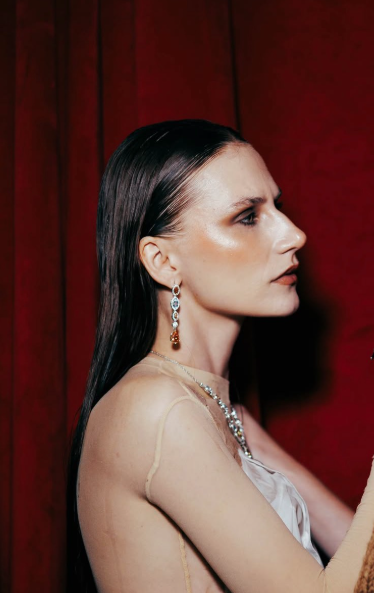
Jewellery has always occupied a unique place in fashion. Unlike many things we wear, a piece of jewellery can remain with us for years, moving through different moments, relationships and versions of ourselves. Its meaning can change with time, transforming an accessory into something deeply personal.
This relationship between design, memory and individual expression sits at the heart of Rose Joy Jewellery.
From Adornment to Personal Expression
The appeal of jewellery is not determined by size or price alone. Sometimes a delicate ring carries more significance than an elaborate statement piece because of the story attached to it.
Rose Joy Jewellery explores this emotional dimension through designs intended to interact with the personality of the wearer. Rather than viewing jewellery simply as the final addition to an outfit, the brand considers how colour, form and materials can contribute to personal expression.
A gemstone may be selected because of its symbolism, but equally because its colour recalls a person, destination or particular memory. This freedom to create individual associations is part of what makes jewellery so enduring.
The Language of Gemstones
Gemstones can completely change the character of a piece.
Rose Joy works with stones including sapphire, moissanite, topaz, amethyst, agate and pearls, using differences in colour, transparency and reflection to create visual contrast.
Sapphire can introduce rich colour, while moissanite is known for its brilliance. Pearls offer an entirely different visual quality, with their softer lustre providing an alternative to the sharper reflections associated with faceted stones.
Beyond their appearance, gemstones have accumulated cultural and historical symbolism over centuries. Yet choosing a stone does not have to be dictated by traditional meanings or birthstones. Increasingly, jewellery is selected according to a more personal connection: simply loving a particular colour can be reason enough.
Understanding the Material
The metal surrounding a gemstone is equally important.
925 sterling silver features within Rose Joy’s jewellery, providing a versatile foundation for different finishes and stone combinations.
Material should also be a practical consideration when purchasing jewellery. Understanding whether a piece is sterling silver, plated, vermeil or solid precious metal helps determine how it should be maintained and how its appearance may develop over time.
For consumers becoming more considered about what they buy, knowing what an object is made from can be as important as its immediate visual impact.
Nature, Form and Light
Nature provides another reference point within Rose Joy’s visual language.
Botanical shapes, organic forms, landscapes and changing light can all provide starting points for jewellery design. Rather than appearing only as literal representations, these influences can emerge through curves, gemstone colours and sculptural compositions.
Light is particularly important because jewellery is never completely static.
A polished surface changes as the body moves. A gemstone can appear different depending on its environment. Earrings interact with the movement of the face, while necklaces follow the architecture of the neckline.
Jewellery therefore becomes part object and part experience.
Jewellery and Personal Style
One of the most interesting developments in contemporary jewellery is the weakening of rigid rules around how pieces should be worn.
Fine-looking jewellery no longer needs to be reserved exclusively for formal occasions. Statement earrings can accompany minimal tailoring; gemstones can be worn with an oversized shirt; several delicate pieces can be layered together or one dramatic object can stand alone.
The important consideration is proportion.
A substantial necklace can become the centre of an otherwise restrained outfit, while sculptural earrings can frame the face without requiring additional accessories.
Rose Joy’s collections sit within this broader approach to jewellery as an extension of styling rather than something governed by a single dress code.
Choosing Jewellery for Longevity
For anyone building a jewellery collection, one question is particularly useful:Will I still want to wear this when the current trend has passed?
Longevity does not necessarily mean choosing something conservative. A dramatic piece can remain relevant for decades when it genuinely reflects someone’s personality.
Practical considerations matter too. Buyers should examine materials, stone settings, dimensions, earring weight, fastening mechanisms and care instructions. These details can determine whether something that looks beautiful in a photograph actually becomes part of everyday life.
The goal is not necessarily to own more jewellery, but to understand why particular pieces deserve a place in a collection.
Sterling Stories
Rose Joy’s idea of “Sterling Stories” reflects the relationship between jewellery and experience.
A designer can determine the materials, proportions and original inspiration behind a piece, but cannot determine everything that object will eventually represent.
The wearer completes that process.
A necklace may become associated with a journey. A ring might mark independence or achievement. Earrings worn for an important celebration may eventually become inseparable from the memory of that day.
This is where jewellery can transcend its original function.
It begins as an object designed to be worn, but time gives it another identity.
For Rose Joy Jewellery, that relationship between material, design and memory provides a natural framework for understanding contemporary jewellery not simply as decoration, but as something capable of collecting stories as it moves through life.
